SVL Sheath Voltage Limiter
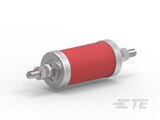
The main purpose of the cable sheath arrester is to protect the outer metal sheath of the cable from electrical stresses caused during transient events. Most cables today have a metallic sheath where voltage is induced onto it from the primary conductor and the current flows directly to earth, if they are earthed and a loop is created. There are two issues: losses and temperature rise of the cable.
A common means of reducing the losses in a cable system is segmenting to interrupt the flow of induced sheath current, it is also a requirement to limit the induced voltage on the sheath during transients. There are various ways of limiting losses although, cross-bonding on cable systems is considered the most eff ective and requires cable sheath surge protection.
- High-voltage cable sheath protection
- Robust TE design using Raychem high quality insulating materials (EVA)
- Meets standard IEC600099-4
- 107mm high
| CPA-xx Series | 1-8kV Uc | |
| Rated discharge current (8/20μs) | 10 kA | |
| Line discharge class according to IEC 60099-4 | Class 1, 2, 3 | |
| Operating duty impulse withstand current (4/10μs) | 100 kA | |
| Long duration current impulse (2000μs) | 400 A | |
| 10 second temporary overvoltage (UTOV/UC) | 1.30 | |
| Energy | line discharge impulse high current impulse | 2.0 kJ7kV Uc 3.2 kJ/kV Uc |